The Science Behind Stretching
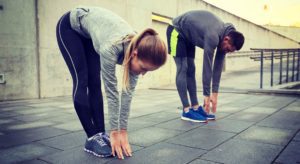
We have all heard of the importance of stretching and yet it is amazing how many people do not stretch after their warm up. Stretching is a fundamental way to improve your overall health and fitness and help prevent injury during exercise. It should always be done after a warm up and prior to engaging in an exercise as it prepares the muscles for exercise and decrease the chances of injury.
Stretches can either be dynamic, which involves motion, or static which involves no motion. This article will briefly explain the different types of stretching.
Ballistic stretching
This not-so-common type of stretching uses the momentum of the moving body in order to attempt to “force it beyond its normal range of motion”. This type of stretching might lead to injury because it does not allow your muscles to adjust to, and relax in the stretched position. For example: bouncing down repeatedly to touch your toes.
Dynamic Stretching
Dynamic stretching consists of controlled leg and arm swings that take you gently to the limits of your range of motion. An example of dynamic stretching would be slow, controlled leg swings, arm swings, or torso twists.
Static Stretching
Static stretching involves holding a position, by stretching to the farthest point and holding the stretch.
Isometric Stretching
Isometric stretching is a type of no motion stretching that involves the resistance of muscle groups by tensing the stretched muscles. The use of this type of stretching is one of the fastest ways to develop flexibility and is much more effective than other type of stretching.
The hold-relax
This technique is also known as the contract-relax. After assuming an initial passive stretch, the muscle being stretched is contracted for 10-15 seconds, after which the muscle is briefly relaxed for 5 seconds, and then immediately subjected to a passive stretch which stretches the muscle even further than the initial passive stretch. This final passive stretch is held for 10-15 seconds. The muscle is then relaxed for 20 seconds before performing another technique.
When done properly, stretching can include more benefits such as:
Enhanced physical fitness
Enhanced ability to learn and perform skilled movements
Increased mental and physical relaxation
Reduced risk of injury to joints, muscles, and tendons
Reduced muscular soreness
Reduced muscular tension
Are you suffering from blue days? Here are 5 ways to combat that dreading non-energetic mood
With recent focus on reducing the glycemic index of the foods we eat, nutritionists and dietitians are often bombarded by questions about fruit: Is fruit good for me? What about the sugar? Am I eating too much fruit? What’s the best type of fruit to eat?
No. Muscle and fat are two different types of tissues, so muscle can never become fat or vice versa. The components the body uses in order to make fat or muscle are not the same, so while it can appear that one might be transforming into the other, it is not physically possible.
Many life experiences (meals, movies, laughs, shopping, travel, etc…) are enhanced when shared with others. Why then, do so many people choose to make fitness a solitary mission? Exercising as a group has many health and additional benefits for each person in the group as well as for the group as a whole.
A new year is a great time to make lifestyle changes, as long as you have a plan to make them stick. On the nutrition front, you’ll be happy to know that even modest changes to your diet can lead to extraordinary results. The key is to take that first small change, implement it masterfully, and then make another change.
If you’ve been in any Survivor Bootcamp session, you’ve definitely been exposed to both squats and lunges, the quintissential leg exercises. While you undoubtedly hate one of these two movements (especially when they become part of a compound exercise – like the squat part in a burpee), both squats and lunges are ideal for building leg strength.
We’ve all heard, at one point or another, that breakfast is the most important meal of the day. While most parents make sure their kids start their day with a full stomach, many adults tend to make it all the way to lunchtime on a few cups of coffee. Research has found that people who skip the first meal of the day are more likey to eat a bigger lunch, and also tend to seek out unhealthier and higher-calorie foods.
When people think about ab exercise, they tend to think about getting a six-pack, flattening their stomach and generally looking better. Your abs, however, aren’t just there for looking good – there are far more reasons to exercise them than that! Your abs – that is, your abdominal muscles – are some of the most important muscles in your body. They protect your stomach, liver, kidneys, spleen, colon, and much more besides. In fact, your abs has some role in almost every movement you make, meaning that they are some of the most important muscles you possess.
Artichokes have been around for a long time. Originally found around the Mediterranean Sea, they were used by the ancient Romans to treat poor digestion. Somewhere along the line, the Romans realized artichokes also made great appetizers, and they have been a traditional Italian food ever since.

Follow Us!